Skip to content

To rank on Google in Nepal in 2026, focus on modern SEO fundamentals:
-
Create high-quality, helpful content that directly answers user search intent
-
Optimize on-page SEO (title tags, meta descriptions, headers, internal links)
-
Implement local SEO by optimizing Google Business Profile, local keywords, and NAP consistency
-
Ensure technical SEO excellence (fast loading speed, mobile-friendly design, HTTPS, clean site structure)
-
Build authoritative backlinks from relevant Nepali and international websites
-
Use E-E-A-T signals (experience, expertise, authority, trustworthiness) to improve credibility
-
Optimize for AI search & voice search with clear answers, structured data, and natural language
-
Regularly update content based on search trends and Google algorithm changes
Consistent optimization, user-focused content, and local relevance are key to ranking on Google in Nepal in 2026.
This guide is based on my clients’ real website performance, allowing me to share proven, data-driven strategies on how to rank on Google in Nepal for 2026.
How to Rank Website on Google in Nepal?
Here is the detailed step-by-step guide on to rank website on Google in Nepal for 2026:
1. Technical SEO and Site Structure

A site without a logical structure is invisible to Google’s crawlers. My methodology emphasizes a “Clean Architecture” to ensure 100% indexation.
Topical Clustering (The “Pillar” Method)
Don’t write isolated blog posts. Build “Clusters” to prove authority.
-
Pillar Page: “What is SEO? The Ultimate Guide to Search Engine Optimization.”
-
Sub-pages (Clusters): “SEO Fundamentals for Nepal,” “How search engines work,” “On-page SEO basics.”
-
Internal Linking: Use descriptive anchor text (e.g., “Check our Off-page SEO basics“) to pass “link juice” between related pages.
URL and Schema Best Practices
-
Clean URLs: Avoid sumanstha.com/?p=345. Use like this “sumanstha.com/seo-ranking-factors-2026″
-
Structured Data (Schema.org): Implement LocalBusiness and FAQ Schema. This allows your site to take up more space on the SERP through “Rich Snippets.”
2. Local Search Infrastructure & Geo-Targeting
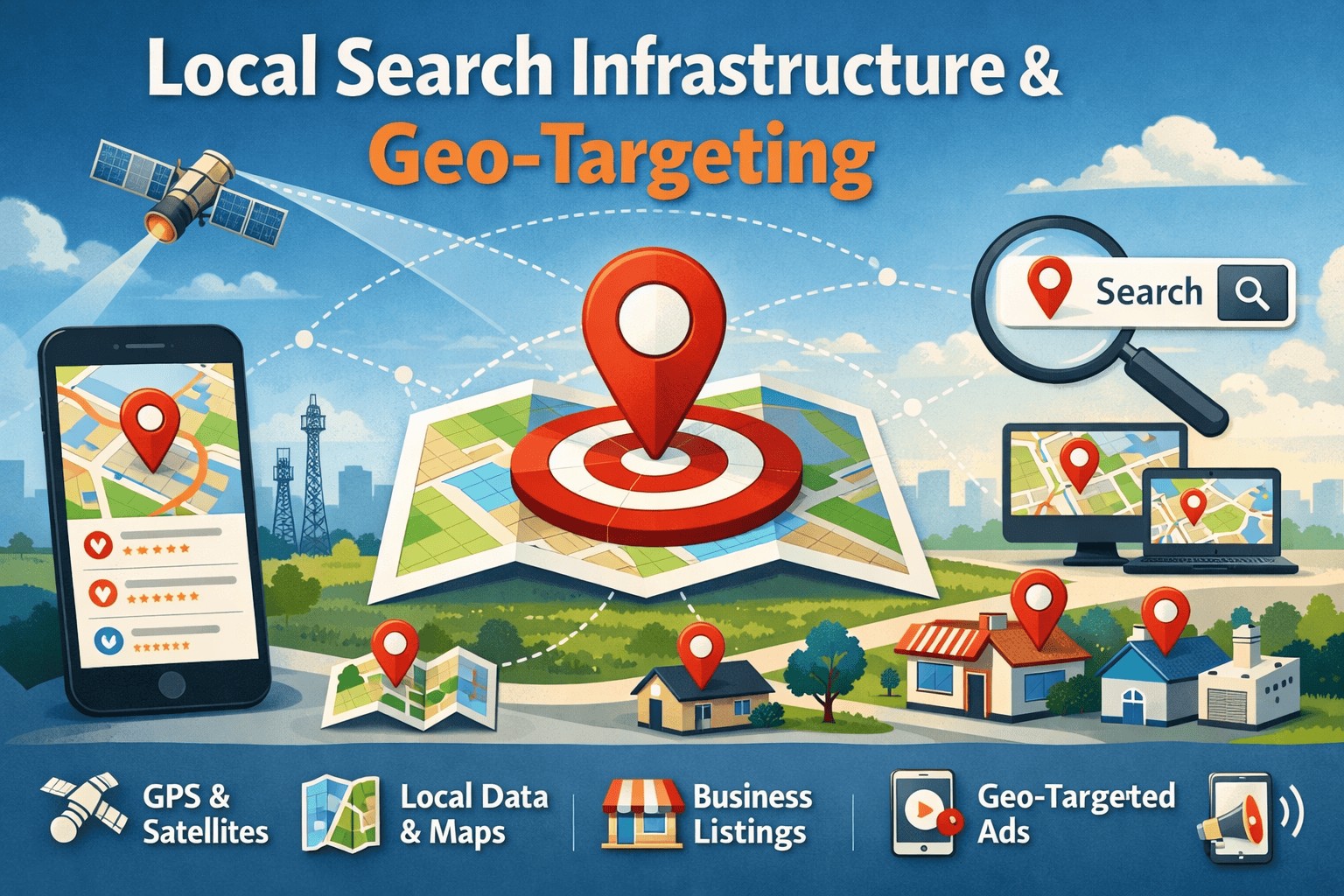
Based on my experience with service-based businesses in Nepal, the technical foundation must be geographically anchored.
Google Business Profile (GBP) Optimization
In 2026, a GBP is not just a listing; it is your digital storefront.
-
NAP Consistency: Your Name, Address, and Phone number must be 100% consistent across your website footer, your
.com.npregistration, and your GBP. -
Geo-Tagged Media: Upload photos of your local establishment in Nepal with embedded GPS metadata. Google uses this to verify that your business is physically present in the location you claim.
-
Interaction Velocity: Promptly responding to reviews from Nepali users and posting “Updates” weekly signals to Google that the business is active in the local community.
Technical Performance for the Nepali Network
Network variability remains a challenge in Nepal. To rank on the top, your site must adhere to strict Core Web Vitals:
-
LCP (Largest Contentful Paint): Target < 2.0 seconds for users in Kathmandu to account for higher latency in rural areas.
-
Mobile-First Indexing: Google uses the smartphone agent to crawl. If your site’s mobile version is slower or has fewer features than the desktop version, your rankings will suffer.
3. The “Suman Shrestha” Content Framework (E-E-A-T)
High-quality content in 2026 is measured by how much “Information Gain” it provides. Simply rehashing existing articles will result in your site being filtered out.
The People-First Content Approach
Instead of targeting high-volume keywords, focus on the user’s specific journey in Nepal.
-
Informational Intent: Create guides that solve local problems (e.g., “How to integrate eSewa for small businesses in 2026”).
-
Transactional Intent: Optimize for “near me” and specific product availability in Nepal (e.g., “Best SEO packages for dental clinics in Lalitpur”).
Bilingual and Romanized Search Optimization
Nepali search behavior is unique. Users search in English, Devanagari, and Romanized Nepali.
-
Implementation: Your
H1andH2headers should mirror how a Nepali person speaks.-
Example: Use “Sasto and Ramro SEO Expert in Nepal” as a header to capture hybrid search intent.
-
-
Voice Search: Structure your content as “Question and Answer” to capture voice queries made via Google Assistant in the Nepali accent.
4. The 2026 Nepal Search Landscape
Google’s localized infrastructure for Nepal now prioritizes Contextual Relevance over Link Quantity. For a Nepali user, “Experience” (the first ‘E’ in E-E-A-T) is the primary ranking signal.
Key Shifts in Local Search
-
AI-Integrated SERPs: Google’s Search Generative Experience (SGE) now dominates the top of the page. Your content must be structured to feed these AI snapshots.
-
Hyper-Local Discovery: Proximity is no longer just about the city; it is about the “Tole” or district.
-
Low-Bandwidth Efficiency: With significant traffic coming from 4G/5G mobile data in varying terrains, technical “lightness” is a ranking factor.
5. Performance Metrics & Anti-Patterns
Success in 2026 is about avoiding the “shortcuts” that the new Google SpamBrain AI identifies instantly.
Factors for 2026 Success
| Priority | Factor | Actionable Requirement |
| Critical | User Dwell Time | Content must be engaging enough to keep a user for >2 minutes. |
| High | SSL/HTTPS | Mandatory. Google flags non-secure sites in Nepal as “Dangerous.” |
| High | Conversion Design | SEO is useless if it doesn’t lead to a lead or a sale. |
| Moderate | Backlink Quality | One link from a reputable Nepali news site is better than 100 global spam links. |
Anti-Patterns to Avoid
-
AI Spam: Do not generate 100% of your content with AI. Google 2026 updates heavily penalize sites with no “Human Experience” (the new ‘E’).
-
Keyword Stuffing: If the text feels repetitive to a human, it is a red flag for the algorithm.
-
Faking Reviews: Google can now detect patterns of inorganic reviews. Focus on getting real feedback from your Nepali clients.
Learn more about “SEO mistakes to avoid”
6. Next Steps: A 3-Month Roadmap
Based on my client lifecycle, follow this step-by-step implementation:
-
Month 1: The Foundation. Perform a full technical audit. Fix 404 errors, optimize site speed for 4G, and verify Google Search Console with a focus on the Nepal region.
-
Month 2: Content & Local Authority. Launch 4-6 high-value “Topic Clusters” specifically for the Nepali market. Optimize your Google Business Profile with fresh local media.
-
Month 3: Optimization & Growth. Analyze Search Console data to see which local keywords are gaining “Impressions.” Refine those pages and begin ethical outreach for local mentions and backlinks.
Learn my “SEO ranking factors in 2026″ blog.
Suman’s Pro Tip:
In Nepal, don’t just summarize the theory. Summarize the action. AI Overviews for the Nepal market often trigger for “how-to” queries. If your summary says, “Step 1: Register .np domain; Step 2: Set up local GBP…”, you are 5x more likely to be featured in the AI snapshot than a competitor who just writes a long, unstructured intro.
Conclusion
Ranking in Nepal in 2026 is not about “tricking” the algorithm; it is about providing the most helpful, fastest, and most locally relevant answer to a user’s question. By following this guide and focusing on human-first SEO, your business can transition from invisible to indispensable in the local search market.
For personalized implementation or a free audit of your current site’s performance in Nepal, visit sumanstha.com to consult with a specialist who understands the local digital landscape.
Frequently Asked Questions about SEO Fundamentals in Nepal
This is the commonly asked questions genuenly by userr about SEO basics in Nepal;
1. How long does it take to rank a website in Google Nepal in 2026?
Typically, a well-optimized site in Nepal takes 3 to 6 months to see significant movement. While global competition is high, the “localization” factor in Nepal allows faster ranking for niche keywords if you focus on local relevance and technical speed from day one.
2. Is a .com.np domain better for SEO than a .com domain?
For local SEO in Nepal, a .com.np domain provides a strong “Geographic Signal” to Google. It tells the crawler that your content is specifically for the Nepalese audience. However, a .com domain can rank just as well if you correctly set your “Target Country” to Nepal in Google Search Console.
3. How do I optimize my website for slow 3G/4G connections in rural Nepal?
Focus on “Lightweight SEO.” This includes using WebP image formats, minifying CSS/JS files, and implementing “Lazy Loading.” Your goal is to pass the Core Web Vitals assessment with a Largest Contentful Paint (LCP) of under 2.5 seconds on a simulated mobile network.
4. Does Google understand Nepali Devanagari script for ranking?
Yes. In 2026, Google’s Natural Language Processing (NLP) is highly capable of understanding Devanagari. For the best results, use a “Hybrid Strategy”: include the Devanagari script for main headings and Romanized Nepali (e.g., “Sasto Bazaar”) in your subheaders to capture all search variations.
5. Can I rank in Nepal without a physical office location?
Yes, but it is harder for “Local Map Pack” results. If you don’t have an office, you should list yourself as a “Service Area Business” in your Google Business Profile. Focus heavily on “Topical Authority” through your blog to compensate for the lack of a physical local signal.
6. Will AI-generated content penalize my rankings in the Nepalese market?
Google does not penalize AI content simply for being AI-generated, but it does penalize “Unhelpful Content.” In the Nepal 2026 context, pure AI content often lacks local nuances (like mentioning local holidays, districts, or payment habits). You must edit AI content to include Human Experience and local data to rank.
7. What is the most important “hidden” ranking factor for Nepal in 2026?
User Engagement Velocity. Google tracks how quickly and frequently local users interact with your site via mobile. High “Dwell Time” (users staying on your page) and low “Pogo-sticking” (users clicking back to search results) are the strongest indicators that your site is the best result for Nepal.