
Kids Personal Care SEO Case Study: +280% Clicks, +4,700% Impressions in 3 Months
A US kids' personal-care brand had a loyal following but almost no organic discovery. Here's how a focused educational-content strategy took it from branded searches only to ranking across an entire parenting research journey.

Known by name, invisible everywhere else
When the project began, almost all traffic came from people who already knew the brand — they searched the company name directly. For every other question a parent might type into Google before buying, the site simply wasn't there. That's a growth ceiling: a site can only be found by people who already know it exists.
A brand people knew, but couldn't discover
- Heavy dependence on branded searches
- Minimal non-branded organic traffic
- Limited topical authority in the kids' deodorant niche
- Few pages targeting parent-focused search intent
- Low visibility for educational, awareness-stage keywords
- Small catalog — only 7–8 products to build pages around
Answer the question before selling the product
Instead of building more product pages for a seven-product catalog, we mapped what parents were actually researching — the worries and questions that come before a purchase decision, not after.
Strategy Goals
- Educate parents at the research stage
- Build real topical authority in the niche
- Grow non-branded visibility from zero
- Introduce the brand naturally, mid-research
- Build a path from question to product
Content Approach
Articles were built around real concerns — eczema-safe deodorants, aluminum-free formulas, deodorant vs. antiperspirant for kids, safe skincare routines for tweens — the exact conversations happening in parenting forums and pediatrician offices, brought onto the site.
Measured in Search Console, not guesswork
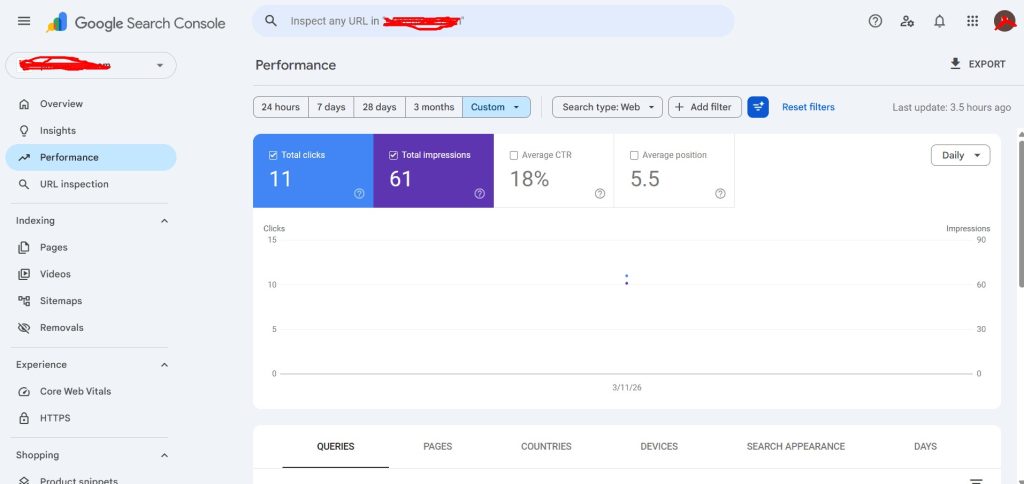
GSC performance — before the campaign.
The site stopped waiting for people to search its name. Google began surfacing it for hundreds of new, unbranded queries — deodorant for kids with eczema, eczema safe deodorant, best deodorant for tweens, tween skincare — expanding the brand's reach well beyond its existing audience.
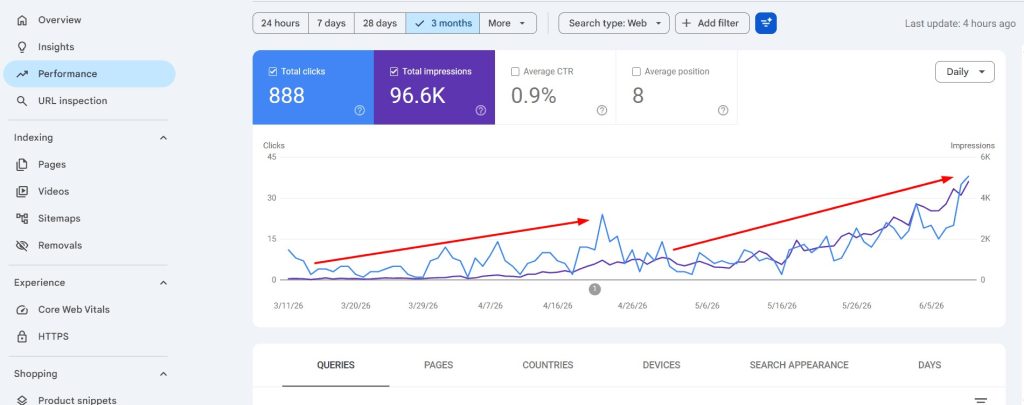
GSC growth curve — first 90 days.
Why average position dipped — and why that's a good sign. As Google tested the site against hundreds of new keywords, most new rankings landed outside the top spots at first, pulling the average position down. That's not a setback: impressions were climbing far faster than rankings had time to mature. The site was simply being shown to far more searches than before — and that's where the next phase of ranking gains comes from.
What actually changed for the business
Less Reliance on Brand Searches
Traffic began coming from problem-solving searches instead of resting entirely on people already knowing the name.
Real Topical Authority
The site earned relevance around kids' deodorants, tween hygiene, eczema-safe care, and sensitive skin — a niche it barely registered in before.
Reach Beyond the Existing Audience
Google expanded the site's visibility across thousands of additional search opportunities it had never appeared in.
Assets That Keep Working
The content keeps attracting visitors long after publication — a compounding asset, not a one-time spend.
A Full Customer Journey
Content now supports the reader from first question through research, consideration, and product discovery.
Small catalog, big content moat
"A brand doesn't need a hundred products to earn organic growth — it needs to answer the questions its customers are already asking."
With only seven products, this brand couldn't out-catalog its competitors. Instead, it out-answered them — building visibility, trust, and traffic around the real concerns of parents, long before those parents were ready to buy.
Want this kind of growth for your brand?
Whether you sell 7 products or 700 — a content strategy built around real customer questions compounds. Let's find yours.
Book a Free SEO Audit