
To become an SEO expert in Nepal for 2026, start by learning the basics of SEO and practicing on real projects. Stay updated with the latest trends, connect with other SEO professionals, and earn certifications to build credibility. Create a portfolio to showcase your work and consider specializing in a specific area of SEO for long-term growth.
Below is a detailed explanation, step-by-step guide, or roadmap about becoming the best SEO specialist in Nepal:
Step 1: Master SEO Fundamentals to Become an SEO Specialist in Nepal

Your SEO journey begins with understanding three core areas that form the foundation of search engine optimization. These aren’t just theoretical concepts. They’re practical skills you’ll apply daily once you start working with real websites.
Understanding On-Page SEO
On-page SEO focuses on everything you can control directly on your website. When you write a blog post about “Best SEO Expert in Nepal,” on-page SEO means putting that exact phrase in your title, using it naturally in your first paragraph, and creating clear headings that break down your content into digestible sections.
The quality of your content matters more than keyword stuffing ever did. Google’s February 2026 algorithms can detect when you’re writing genuinely helpful information versus when you’re just trying to manipulate rankings. Your meta descriptions (those short summaries that appear under your page title in search results) should entice people to click while accurately describing what they’ll find.
Internal linking connects your website’s pages, helping both visitors and search engines understand how your content relates. If you’re writing about “How to find the best SEO expert in Nepal“, linking to your other articles about SEO creates a web of related information that search engines reward.
Building Authority Through Off-Page SEO
Off-page SEO happens outside your website but significantly impacts how Google views your authority. The most important element is backlinks. When other reputable websites link to your content. One quality backlink from a respected SEO niche website carries more weight than dozens of links from random directories.
Getting these backlinks requires creating content worth referencing and building relationships with others in your industry. When you write the most comprehensive guide to “YouTube SEO in Nepal” and Nepal SEO blogs link to it as a resource, that’s off-page SEO working in your favor.
Social signals from platforms like Facebook and Instagram don’t directly improve rankings, but they drive traffic and increase brand awareness, which indirectly benefits your SEO efforts. In Nepal’s close-knit business community, word-of-mouth and social sharing can significantly amplify your content’s reach.
Mastering Technical SEO Essentials
Technical SEO ensures search engines can properly crawl, understand, and index your website. This is where many beginners struggle because it involves website structure and code, but you don’t need to be a programmer to grasp the essentials.
Website speed critically affects both user experience and rankings. If your site takes more than three seconds to load, you’re losing visitors before they even see your content. In Nepal, where many users browse on mobile networks with inconsistent speeds, optimizing images and minimizing code becomes even more crucial.
Mobile-friendliness isn’t optional in 2026; it’s mandatory. Google primarily uses the mobile version of your website to determine rankings. With more than 50% of Nepali internet users accessing websites through smartphones, your site must look and function perfectly on smaller screens.
Your XML sitemap acts like a roadmap for search engines, listing all important pages they should index. The robots.txt file tells search engines which pages to skip. Setting these up correctly prevents Google from wasting time crawling unimportant pages like admin areas while ensuring all your valuable content gets discovered.
Free Learning Resources To Get Started with SEO

Google’s Search Central documentation remains the gold standard for learning SEO fundamentals. It’s written by the people who build the algorithms you’re trying to optimize for. Ahrefs’ blog publishes weekly updates on algorithm changes and practical strategies. Search Engine Journal covers industry news and expert insights. YouTube channels from Aleyda Solis and Marie Haynes provide in-depth explorations of advanced topics.
Step 2: Practice on Real Websites
Reading about SEO and doing SEO are completely different experiences. Theory gives you a roadmap, but practice teaches you the real challenges you’ll face daily. The fastest way to develop genuine expertise is working on actual websites where you can test strategies, make mistakes, and learn from results.
Building Your Personal Test Website
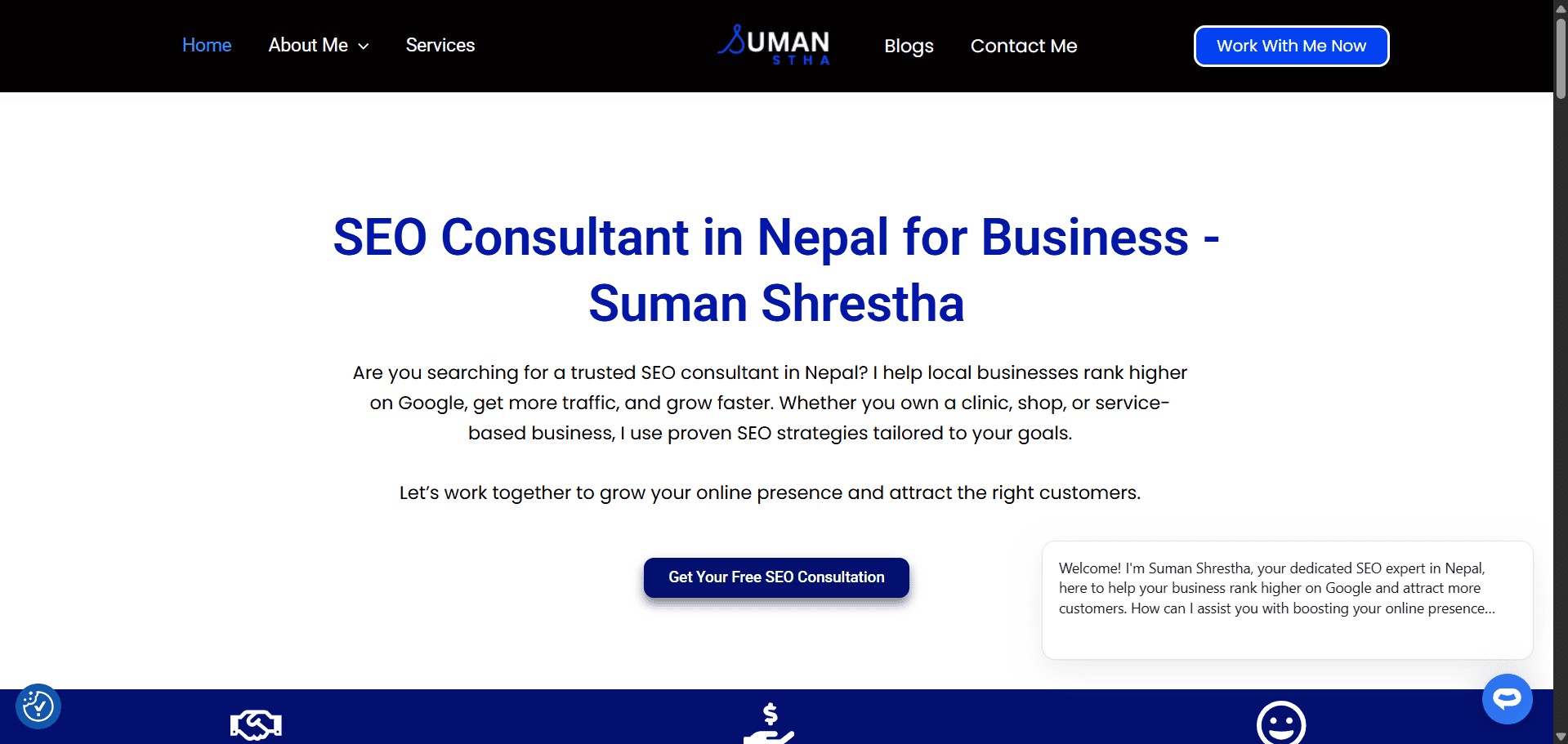
Create a simple blog or website about a topic you genuinely understand. For Example, I have built my own porfolio website named “Suman Stha” and publish blog contents related to SEO. So, this is my expertise in the SEO field. The specific topic matters less than your commitment to consistently publishing content.
Start by researching keywords people search for, using free tools like Google Keyword Planner or Ubersuggest. Use the more popular phrase naturally in your title and throughout your content.
Publish your first article, then watch what happens over the following weeks. Check Google Search Console to see if Google discovered and indexed your page. Monitor your rankings, even if you start on page. Watch your site gradually rank to page 2 or 1 on Google search results. It teaches you more than any textbook. This personal website becomes your experimental playground where you can test different title formats, content lengths, and linking strategies without risking client projects.
Helping Local Businesses Improve Their Visibility

Thousands of small businesses across Nepal have websites but zero understanding of SEO. Walk through any commercial area in Kathmandu, Pokhara, or Chitwan, and you’ll find restaurants, clinics, and shops with websites that don’t appear anywhere on Google when potential customers search for their services.
Identify businesses in your neighborhood whose websites could use improvement. A simple approach works best: “I noticed your restaurant doesn’t show up when I Google ‘best momo near Patan Durbar Square.’ I’m learning SEO and would like to help improve your visibility for free to build my experience.”
Most business owners will appreciate the honest offer. Start with simple fixes, optimizing their Google Business Profile, rewriting their homepage title and description, adding location-specific content, and ensuring their contact information appears consistently across the web. Document everything thoroughly with before-and-after screenshots of rankings and traffic. These case studies become your portfolio when you’re ready to start charging clients.
Step 3: Learn Essential SEO Tools

Professional SEO work requires specialized tools that help you research keywords, analyze competitors, and track rankings. Start with free tools, master them completely, then gradually invest in paid options as you start earning.
Google Search Console shows exactly how Google sees your website. Every SEO professional checks this tool daily because it reveals which keywords bring visitors, which pages have technical errors, and whether Google successfully indexed your content. The Coverage report identifies pages Google couldn’t index due to errors, allowing you to fix problems before they hurt rankings.
Google Analytics reveals what visitors do after arriving on your site.
- Which pages do they spend time reading?
- Where do they leave?
- Are they using phones or computers?
If your blog post about “Annapurna Base Camp trek difficulty” attracts thousands of visitors but they all leave within 10 seconds, something’s wrong; either the content doesn’t match expectations or the page loads too slowly. Track conversion goals to measure how many visitors book consultations or download resources, because SEO isn’t just about traffic; it’s about attracting visitors who take valuable actions.
Once you’ve mastered free tools and started earning from SEO work, investing in professional platforms becomes worthwhile. Ahrefs remains the most popular choice among Nepali SEO professionals at $129 monthly, offering unmatched keyword research and backlink analysis. It shows exactly which websites link to competitors and how much traffic they receive from specific keywords, revealing opportunities where you can outrank them with better content and strategic backlinks.
Step 4: Stay Updated with Algorithm Changes

Google updates its search algorithms 500 to 600 times yearly. Most changes are minor, but several major updates each year can significantly impact rankings. What worked perfectly three months ago might become less effective today. Successful SEO experts commit to continuous learning rather than mastering SEO once and stopping.
Google’s AI Overviews now appear at the top of many search results, providing instant answers synthesized from multiple sources. This changes your content strategy because simply answering basic questions won’t generate traffic anymore; AI does that instantly. Focus instead on providing detailed expertise, personal experiences, and nuanced perspectives that AI can’t replicate.
Core Web Vitals have evolved with Interaction to Next Paint, measuring how quickly websites respond when visitors click buttons or interact with elements. Mobile page speed weighs more heavily than ever since most Nepali users browse exclusively on smartphones with varying connection speeds. The Helpful Content System penalizes content created purely for ranking rather than genuinely helping users, so write for humans first and search engines second.
Follow Google’s Search Central Blog for official announcements about algorithm updates. Search Engine Roundtable publishes daily news about ranking fluctuations and confirmed changes. Join Nepal-focused digital marketing communities on Facebook and LinkedIn where local professionals discuss algorithm impacts specific to Nepali websites. When major updates occur, avoid panicking or making hasty changes; wait two to three weeks for rollouts to complete, then analyze what changed in your niche specifically.
Step 5: Build Professional Experience
The transition from learning SEO to earning from SEO happens when you gain practical experience delivering results for real clients or employers. Certifications and theoretical knowledge help, but nothing replaces proven success in improving actual website rankings and traffic.
Platforms like Upwork, Fiverr, and Freelancer.com connect Nepali SEO professionals with international clients paying in USD. Start with modest pricing (NPR 500 to 1,500 hourly initially) and focus on building five-star reviews. Offer specific deliverables like keyword research reports, on-page optimization audits, and local SEO setup rather than vague “SEO services.” As you accumulate positive reviews, gradually increase rates and tackle more complex projects.
MeroJob.com, Kumarijob.com, and JobsNepal.com regularly post digital marketing positions from Kathmandu agencies and international companies.
| SEO Role | Monthly Salary Range (NPR) | Key Notes |
|---|---|---|
| Entry-Level SEO Intern | 15,000 – 25,000 | Strong mentorship, learning opportunity, exposure to projects |
| Junior SEO Executive | 30,000 – 45,000 | Handles tasks with some independence |
| SEO Specialist | 50,000 – 80,000 | Manages campaigns independently, requires proven experience |
Tourism operators, restaurants, educational institutions, and service providers across Nepal need SEO help but often lack awareness or budget for expensive agencies. Research businesses whose websites lack Google visibility despite offering quality services. Approach them with specific observations about their ranking gaps and charge NPR 20,000 to 50,000 monthly for comprehensive local SEO services. Document everything meticulously to demonstrate value through increased rankings and bookings.
Step 6: Network with Industry Professionals

Building relationships with other digital marketers, web developers, and business owners creates opportunities for collaboration, knowledge sharing, and client referrals that accelerate your career growth.
Create a LinkedIn profile highlighting your SEO expertise and completed projects. Connect with Nepali digital marketing professionals and share insights about algorithm updates and successful strategies. Participate actively in Nepal-focused SEO Facebook groups, answering questions and discussing industry developments to establish your expertise.
WordCamp Kathmandu brings together WordPress and SEO professionals annually for workshops and networking. Recently, I participated in Nepal’s first SEO Conference organized by Rambabu Thapa. And I also participated in WordCamp Nepal in 2025 meetup.
Build strategic relationships with web developers, content writers, and social media managers. These partnerships create referral networks where everyone benefits.
Finding a mentor two to three years ahead in their SEO career provides invaluable guidance. Most established Nepali SEO professionals willingly share knowledge with genuinely committed learners.
SEO Career Opportunities in Nepal (2026)

Nepal’s digital economy continues to expand rapidly, creating diverse opportunities for skilled SEO professionals across multiple industries. Tourism and hospitality businesses represent the highest demand sector, with hotels, trekking agencies, and travel companies needing constant SEO support to maintain visibility. These businesses typically pay premium rates because SEO directly impacts their revenue.
E-commerce represents another growth area as more Nepali businesses expand their online presence. From fashion boutiques to electronics stores and handicraft exporters, online retailers need product page optimization and strategies to rank for commercial keywords. Educational institutions, including coaching centers and skill training institutes, compete intensely for exam preparation keywords, creating steady demand for SEO specialists.
Many Nepali SEO experts work remotely for international companies, earning in foreign currency while living in Nepal.
| Region / Country | Typical Monthly Pay for Experienced Remote Specialists |
|---|---|
| United States | $800 – $2,000 per month |
| United Kingdom | £600 – £1,500 per month |
| Australia | AUD 1,000 – AUD 2,500 per month |
Entry-level positions typically pay NPR 25,000 to 40,000 monthly. Mid-level professionals with two to four years of experience earn NPR 50,000 to 85,000 monthly. Senior specialists with five plus years of command earn NPR 90,000 to 180,000 monthly. SEO Managers overseeing teams earn NPR 150,000 to 250,000 monthly. Freelance rates vary from NPR 1,500 to 5,000 per hour for local clients, while international clients pay $12 to $40 per hour.
Frequently Asked Questions
1. How long does it take to become an SEO expert in Nepal?
Most people need 8 to 12 months of dedicated learning and consistent practice to reach job-ready competency. Becoming a recognized expert requires 2 to 3 years of handling diverse projects across different industries. SEO evolves constantly, so continuous learning becomes part of your career rather than a phase that ends.
2. Do I need a college degree to work in SEO?
No formal degree is required. Most successful SEO professionals in Nepal learned through online resources, practical projects, and short courses rather than university programs. Clients and employers care about your proven results and portfolio quality more than educational credentials.
3. Is coding knowledge necessary for learning SEO?
Basic HTML and CSS understanding helps, but isn’t mandatory to start. You’ll naturally pick up necessary technical skills through practice. Advanced technical SEO roles may eventually require JavaScript knowledge, but beginners can succeed by focusing on content optimization and basic technical fixes.
4. Can I learn SEO completely free?
Yes. Google’s documentation, YouTube tutorials, industry blogs, and community forums provide all foundational knowledge free. Paid tools and courses accelerate learning and provide convenience, but they’re not essential for beginners. Many successful SEO professionals started with zero financial investment.
5. What’s the biggest challenge for SEO beginners in Nepal?
Access to premium SEO tools priced in USD creates a barrier for many beginners. Solutions include starting with free alternatives like Ubersuggest and Google’s tools, forming group subscriptions with other learners to share costs, or focusing initially on skills that don’t require expensive software.
6. Which businesses in Nepal need SEO most?
Tourism companies, e-commerce stores, educational institutions, healthcare providers, and local service businesses, including restaurants, salons, and coaching centers, all have high SEO demand. Small businesses often lack internal expertise, creating opportunities for freelancers and consultants.
7. Can I work internationally from Nepal as an SEO expert?
Absolutely. Reliable internet in major Nepali cities and timezone overlap with Asian and European markets make remote SEO work viable. Many Nepali professionals earn foreign currency working for international clients while living in Nepal, often earning significantly more than local employment pays.
8. Should I specialize in a specific type of SEO?
After gaining 1 to 2 years of general experience, specializing typically increases your market value and makes you more competitive. Popular specializations include local SEO, e-commerce SEO, technical SEO, and industry-specific expertise in tourism, healthcare, or education.